
The Power of Youth Participation in Preventing Violent Extremism in Diyala

In 2025, Mercy Hands undertook a project in the district of Khanaqin, located in the Diyala Governorate, with the objective of raising awareness on violent extremism. More than 1,400 participants participated in the project across Khanaqin, Jalawla, and Saadiya, three locations which host a diverse array of ethnic and religious communities and which have been affected by extremist violence in recent history.
In the pursuit of this objective, Mercy Hands coordinated the improvement of pre-existing youth centers in order to create a space for people to merge with groups of other ethnicities and faiths. In each location’s youth centre, local workers carried out small-scale repairs and improvements, and upon their completion, the places became a space to hold training sessions and structured dialogues on PVE, its context-specific triggers, and to create local Plans of Action on the matter.

Following that, the youth centers were arranged to host recreational activities, as well as livelihood programs, in order to strengthen community resilience. Specifically, events dedicated to art, sports, handicraft bazaars, and distributing livelihood products were undertaken while making sure that ethnically diverse male and female youth would participate.
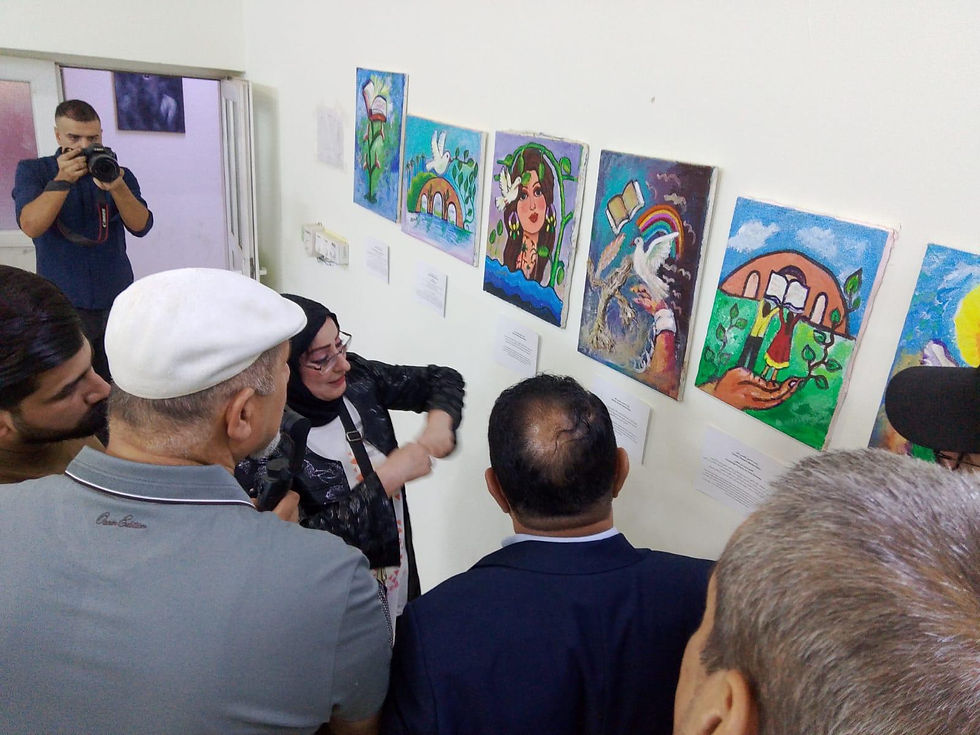
To conduct peacebuilding activities in a conflict-affected environment is a complex task. Can we assess whether its effects on the minds of the affected population ripple once project activities have concluded?
Striving to answer this question, an impact assessment questionnaire related to PVE was distributed prior to project implementation and after the conclusion of the project. The survey consisted of multiple questions tackling the topic of PVE from several perspectives, from correct procedures when addressing a suspected victim to radicalisation, to personal attitudes regarding interethnic and interfaith integration. The questionnaire was administered to project participants as well as community residents in order to assess the general change in perspective in the areas of project implementation.
What emerged from the results was striking: between the beginning and the end of the project, a stark increase of awareness on violent extremism and its prevention was recorded. For example, citizens in Saadiya and Jalawla reported a notable increase in knowledge. In these locations, the youth’s knowledge improved by 35% and 33% respectively. In the same locations, individuals with lower education levels also demonstrated a greater awareness of PVE, with their knowledge increasing by 30% on average.
In Jalawla, young women particularly increased their knowledge by 40%. This stark improvement may be explained by this group’s very high involvement in project activities as, for example, more girls participated in sport matches here than in other locations. Such a high level of participation in project activities may have led to a higher receptiveness to lessons of civic participation and peacebuilding imparted by the project.

In the second half of the survey, surveyees expressed their opinion on interethnic and interfaith exchanges. Prior to the implementation of the project, individuals in Khanaqin and Jalawla reported lower levels of acceptance: only 36% of people believed that young people should spend time with peers from different religious and ethnic backgrounds. Higher-educated individuals and community leaders were also reflected in this percentage, displaying a generally hostile stance towards this concept. Nonetheless, when asked the same question following the conclusion of the activities, 85% of the same people believed in the positive effect of engaging with diverse ethnic and faith groups.
The results demonstrate that peacebuilding projects can have strong generative effects when being directed at the younger population, which holds the keys to the future of their communities. When time and space is devoted to imparting teachings of peace in small, conflict-affected centres, that message is likely bound to be radicated in their mind and produce long-standing effects. In particular, learning lessons of peace through sports and arts adds an interactive, playful and joyful element which will create new pathways for acceptance and integration for a long time to come.


Comments