
Building Hope, Rejecting Hate.
Updated: Jul 28
Khanaqin Youth Centre is quiet while Adnan, the youth centre manager shows Mercy Hands team around, in the searing heat of August, last year.

School is still in session and so the hallways are empty.
Adnan is excited by the announcement of Mercy Hands’ new project which will be based from three youth centres: Khanaqin’s, as well as centres in Alsadiyah and Jalawla. Three small towns in Khanaqin district, Diyala.
He tells Mercy Hands that they receive very little funding, but do their best to engage youth in activities, believing the future of Iraq to be in their hands.

The project, in cooperation with German Cooperation for International Development, aims to build resilient communities to violent extremism, particularly through the empowerment of youth and women. The project will focus on three core components: rehabilitating the youth centres, empowering the community to prevent violent extremism through training sessions and lastly, art, livelihood and sport community events in each of the three towns.
Khanaqin District is no stranger to the impact of violent extremism, having endured the effects of several violent groups in the last decades. Between 2006 and 2007, Diyala was identified as one of the most violent areas during the Iraq war, and in 2012 it had one of the highest civilian death rates, at 9 per one thousand. During the war, Diyala was a major base for Al Qaeda and, later in 2014, ISIS took control of large parts of Diyala province, controlling towns including Al Sadiyah and Jalawla, through brutal force, launching attacks on markets, security forces, local leaders and members of the population.
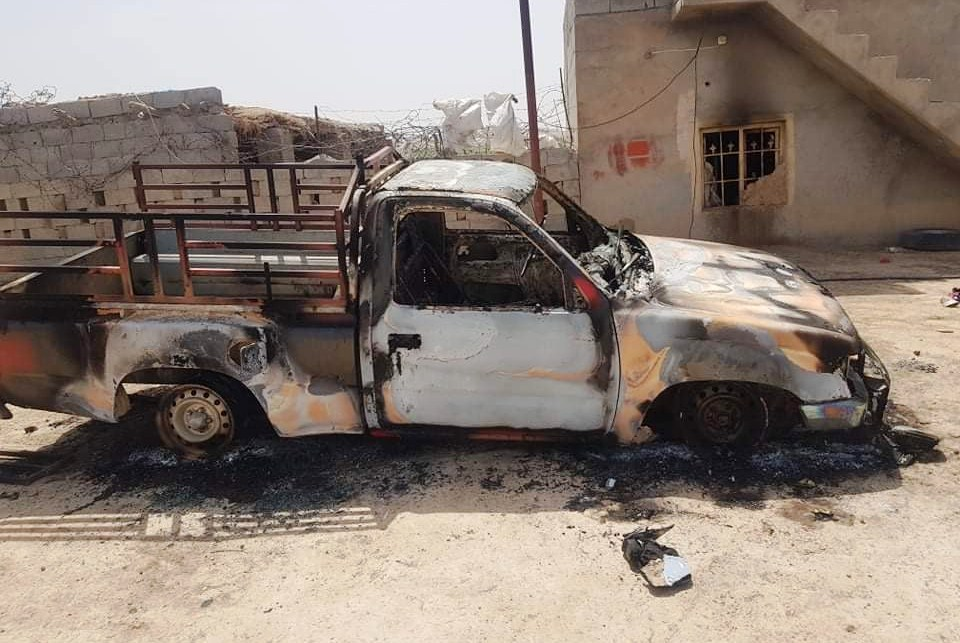
The district continues to experience political instability.
Although liberated from ISIS, communities continue to grapple with the lasting repercussions of years under extremist rule, one such consequence includes fragmentation and tensions between Arab, Kurdish and Turkoman families. Tensions are heightened further by the lack of economic growth and opportunity for young people. In Diyala, 32% of young people are unemployed.

Khanaqin district is still littered with the scars of conflict. Road signs remind the community of the presence of landmines - in fact, at Alsadiyah youth centre, the only artwork is a cartoon warning children to stay away from landmines hidden in long grass.

During ISIS' occupation of territories in Iraq, they were known to systemically co-opt youth centres, schools and sports fields to use as training grounds or bases to launch attacks.
Houses destroyed by ISIS still line the left of the road at the entrance to Alsadiyah town. But to the right, new houses are sprouting up.
The first step in the project is to carry out repairs and improvements in each youth centre, followed by training for community leaders on the prevention of violent extremism and how to foster social cohesion.


Once repairs are completed at the centres, Mercy Hands team delivers a task to local artists: design a mural at the entrance of the centre which creates a safe space for the youth of Khanaqin. Within a few days, three sketches are sent to the team. At the front of all three, are six people: three men, three women, wearing traditional Arab, Kurdish and Turkoman dress.
Artists from Jalawla and Alsadiyah design similar sketches.
The sketches are not without some push-back. Some are worried about potential negative fallout from the community, others push for less explicit messaging, proposing instead a simple design of a tree.
But Mercy Hands team hold meetings with those concerned and highlight the potential impact of having murals like these at the entrance to each youth centre. Community figures are in agreement, there is no place for hatred and violence in their youth centres. And so, eventually, an agreement for the murals is reached.
The next step of the project is the community activities. Local boys and girls participate in football, volleyball and basketball matches. Each player wears a kit displaying the words Youth Ambassador for Peace, and beneath it, the project’s slogan Building Hope, Rejecting Hate.


Afterwards, each town holds vocational training sessions and puts on bazaars selling local craft and produce.


At both the sport and livelihood events, flyers with PVE referral information are distributed and a speech is delivered by members of the community on the importance of community resilience and creating safe spaces regardless of difference.
Finally, local artists and young people are commissioned to create pieces of art that promote peace and hopeful visions of the future. Art Exhibitions for Peace are held at each centre to showcase the pieces.


Alongside the activities, MH team conduct research into the impact of the project through a survey in month 1, and another in month 6. One question asks community members if they believe young people should spend time with peers from different religious and ethnic backgrounds.
In the first survey, only 36% agreed. By the end of the six month project, this number skyrocketed to 85%.
The three murals are unveiled during the art exhibitions and receive raucous applause from those in attendance. The very art pieces that were suspended for fear of their negative impact.
Rather than allowing the legacy of profound challenges left by years of violent extremist groups and conflict to further fracture relationships, the project supported local efforts to prevent existing divisions from deepening, and to strengthen relationships built on cooperation rather than mistrust.


While Mercy Hands’ six month project in Khanaqin may have ended, its impact remains. The three murals, bearing the words Building Hope, Rejecting Hate in English, Arabic and Kurdish, continue to welcome youth into each centre.
A quiet but firm stand against hatred from the youth centres of Khanaqin district.


Comments